


Cervical osteochondrosisa disease that is the process of malnutrition or gradual destruction of the cartilage tissue of the intervertebral joints and cervical discs.
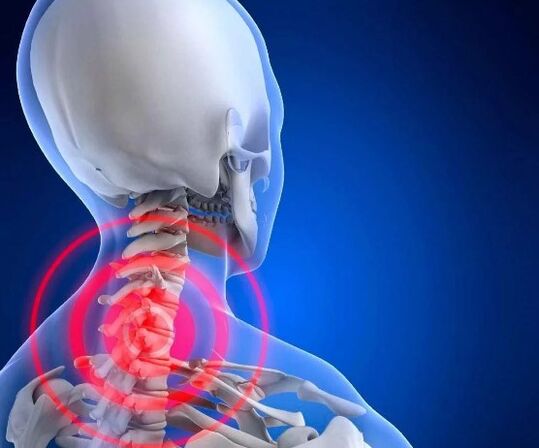
How to easily carry your head on your shoulders?
If you find it difficult to turn your head when someone calls you on the street, if your neck literally does not support itself and only hurts, then it's time to check yourself for osteochondrosis.
This part of the neck is the most susceptible to injury, as it is the most mobile, yet has weak ligaments.The body puts a lot of stress on the small moving vertebrae.And the spinal canal itself is quite narrow.It can be easily pinched under any pressure.
Thousands of people feel heaviness in the back of their necks or tingling in their hands every day.And since they do not know the danger, such physiological manifestations are called fatigue, and sometimes a cold.There are many blood vessels and nerve endings in the neck area.In osteochondrosis, the vertebral artery is compressed, which supplies the cerebellum, the medulla oblongata, and the back of the brain.Because of this, a person's movement coordination becomes ineffective, the sense of balance can be lost, vision deteriorates, hearing deteriorates, and this phenomenon sometimes leads to cerebral hemorrhage.
Fact.According to WHO statistics, people between the ages of 30 and 40 are increasingly suffering from cervical osteochondrosis.Doctors explain this trend with a significant decrease in physical activity.And the prevalence of this disease in industrialized countries is 60-80%.
Syndromes and symptoms of osteochondrosis
- Stenosis (narrowing syndrome of the spinal canal): compression of spinal cord vessels by disc herniation, osteophytes (bone tissue growth) or thickened spinal ligament.As a result, blood circulation in the affected area is interrupted.The person feels restricted and experiences palpable pain in the cervical spine.Numbness and tingling can be seen in the upper and lower limbs
- Radicular syndrome: compression of the nerve roots by the intervertebral disc.This leads to a headache, which is expressed in painful, burning or pulsating impulses, sometimes the sensations are similar to the symptoms of high blood pressure.In this syndrome, speech defects and olfactory disturbances, hypertrophy of the facial muscles, damage to the sensitivity of the tongue muscles, and the feeling of the throat being "clogged" with lumps may occur.Breathing becomes intermittent, the person suffers from snoring, and the nose is often "stuffed" for seemingly no reason.
- Vertebral artery syndrome: it is created by compression (squeezing) of the vertebral artery.Its main accompaniment is throbbing pain.Attacks can affect the parietal lobe, the area above the eyebrows, the temporal and occipital lobes.
- Cardiac syndrome:similar to anginal attacks, but their duration is much longer.The pain is reflected in the diaphragm.In some cases, this phenomenon is accompanied by high blood pressure and cardiac arrhythmia.
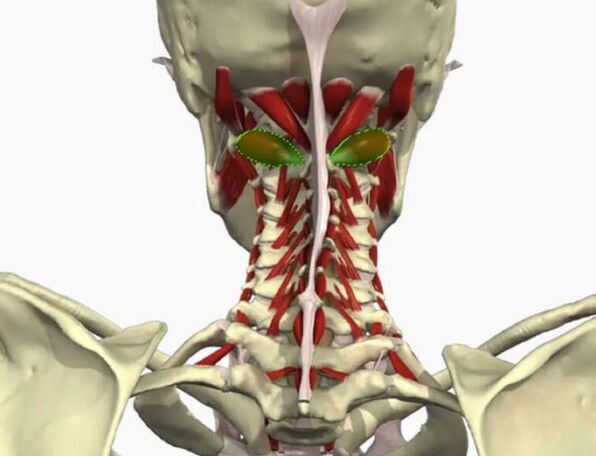
The main causes of the disease
- Metabolic problems;
- Lifestyle with low physical activity;
- Hereditary tendency;
- Age-related ossification;
- Cramps in the muscles, as a result of which the posture changes;
- Lack of fluid and vitamins in the daily diet;
- Staying in an uncomfortable position for a long time, which increases the pressure on the discs and the spine;
- Excess weight or strain on the spine due to wearing heels;
- All types of spinal injuries;
- Regular weight lifting;
- Autoimmune diseases (the process of self-destruction of the immune system) that lead to cartilage tissue degeneration;
- Stress, which leads to muscle spasms and impaired blood flow to the intervertebral discs;
- Hypothermia.
Diagnosis of cervical osteochondrosis
During the initial examination of the patient, the doctor may establish "osteochondrosis of the cervical thoracic region" or simply the cervical region.The expert determines:
- Human body type;
- Posture position;
- Line of spinous processes;
- The lateral contours of the neck and the angle of the shoulder blades;
- Localization of pain points and level of pain;
- The flexibility range of the spine
- Muscle relief.

All this together tells exactly how the disease progresses.The doctor then orders a number of tests:
- Digital radiography;
- CT (computed tomography);
- MRI (magnetic resonance imaging);
- Doppler ultrasound of the main arteries of the brain: a special ultrasound sensor determines the state of blood flow and vessel walls.
Methods of treatment of cervical osteochondrosis
The doctor will help you choose the most optimal solution to the problem.And he offers various treatment methods: drug treatment combined with physiotherapy, or he prescribes an operation that is gentle on your body.
Conservative treatment"This is first and foremost drug therapy."It soothes pain, relieves muscle tension and extinguishes inflammation.For such purposes, non-steroidal anti-inflammatory drugs (NSAIDs) and pain relievers are prescribed.The prescription list includes chondroprotectors for activating the regenerative processes of articular cartilage tissue, as well as B vitamins and external preparations: gels and ointments containing NSAIDs.
Physiotherapy, on the other hand, saturates the nutrient medium of the disc of the intervertebral disc and promotes cartilage regeneration.The doctor also prescribes the exercises of therapeutic gymnastics - to strengthen the muscle ligament and develop the flexibility of the ligament.He can hold an introductory class with you, so that you can do the exercises correctly on your own in the future.
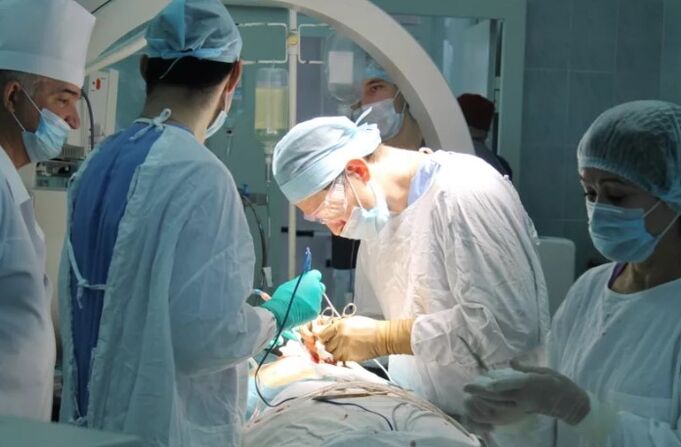
Surgical treatmentIt is advisable in the event that drug treatment and physical intervention are unavoidable.People turn to him when the patient's spinal canal has been catastrophically narrowed.The surgical intervention was called an anterior cervical discectomy.The surgeon immobilizes the affected spinal segment and removes the intervertebral hernia that is pressing on the spinal nerve.Over time, the vertebrae between which the disc was removed fuse together.This is called spondylodesis.In order to achieve greater adhesion, the specialist can perform a stabilizing operation with a cage - that is, the space between the vertebrae is filled with an artificial insert.
After 3-5 days, the operated patient is discharged from the hospital for outpatient treatment.Rehabilitation takes about 3 months on average and depends on the implant inserted and the professional activity of the patient.
What is the best way to shape the lifestyle of a person diagnosed with cervical osteochondrosis?
The daily routine should include obligatory walking, while jumping and running should be avoided.It is not recommended to spend a long time in a sitting position;Swimming is beneficial - it not only strengthens muscle tone, but also relieves spasms that restrict the body.In the evening, it is worth taking a hot shower (except for the period of treatment of the cervical spine during the exacerbation of the disease).You also have to pay attention to your diet.Eat foods rich in magnesium and calcium - nuts, dairy and seafood, legumes.You need to give up alcohol.
Is it possible to visit the sauna during exacerbation of osteochondrosis?
Warming is generally beneficial to the patient, but immersion in cold water should be avoided after intensive steaming.You shouldn't run out into the cold either.Otherwise, the disease will worsen.Cervical osteochondrosis is sensitive to any temperature changes, including climatic changes.For example, the coldness of autumn can negatively affect a person's well-being.
What complications can occur after cervical osteochondrosis?

If you do not start treatment in time, when the first signs of the disease appear, then your neck may literally not listen to you.And the complications of this disease are quite serious.There is a risk of protrusion - the so-called "protrusion" of the intervertebral disc beyond the spine, which may later take the form of a hernia.Nerve roots in the neck area can be damaged.Or osteophytes (bone growths on the vertebrae) may appear.Complications often include muscle weakness or paresis – a condition where the head begins to hang sideways or forward.At this stage, the processes of the cervical vertebrae have vertebral arteries that supply the brain with blood.Disturbance of this blood circulation is one of the most serious phenomena.Refusal to treat can lead to neuralgia, deafness and even vision loss.But if you deal with the problem in the early stages of its development, the disease can be prevented.
Why do you need a Shants collar?
It is an orthopedic brace made of elastic material, which is used to immobilize the neck in the treatment of cervical osteochondrosis.But you can't wear such a device to fix the neck for a long time, because the muscles can weaken over time, and you will get used to tilting your head to the side involuntarily without additional support.The Shants collar does not allow the vertebrae to move and maintains its corrective effect even after the massage treatment.It takes the weight of the head and distributes it evenly across the collarbone and the base of the neck.At the same time, the head remains in the correct position.